Reconnect Feb March 2026
How do we make connection in this digital age? I have been musing on the concept of community and considering its multi faceted nature. At the personal level we have an internal community of the different aspects of ourselves described in various ways by different psychological theories, with similarities in understanding, The archetypes of Jung; Parent, Adult and Child of Transactional Analysis; the parts in Internal Family Systems, sub personalities of Assagioli etc. The integration of these different aspects of self to create a more cohesive whole leads to the maturation of the psyche, individuation and personal growth.
We tend to think of communities as a collection of people with common interests or values. In this post industrial era we have been encouraged to think of ourselves as individuals pitting against each other, fighting for resources and treating the earths bounty as a commodity of limitless supply. A deeper understanding is emerging, inspired by indigenous people and their relationship with the earth and all that manifests from it, that we are in community with the land, the birds, the trees and all the abundance of nature which surrounds us.
Bill Plotkin talks of a village being a human community, or the human element of the great Earth community. The writing of Robin Wall Kimmerer reminds us of our collective nature: ‘the trees act not as individuals, but somehow as a collective. Exactly how they do this we don’t know yet. What happens to one happens to us all. We can starve together or feast together.’ She writes about the need for gratitude and reciprocity. The give and take, the honouring of all living creatures of which we are just one species. ‘learning to live here as if we are staying here’.
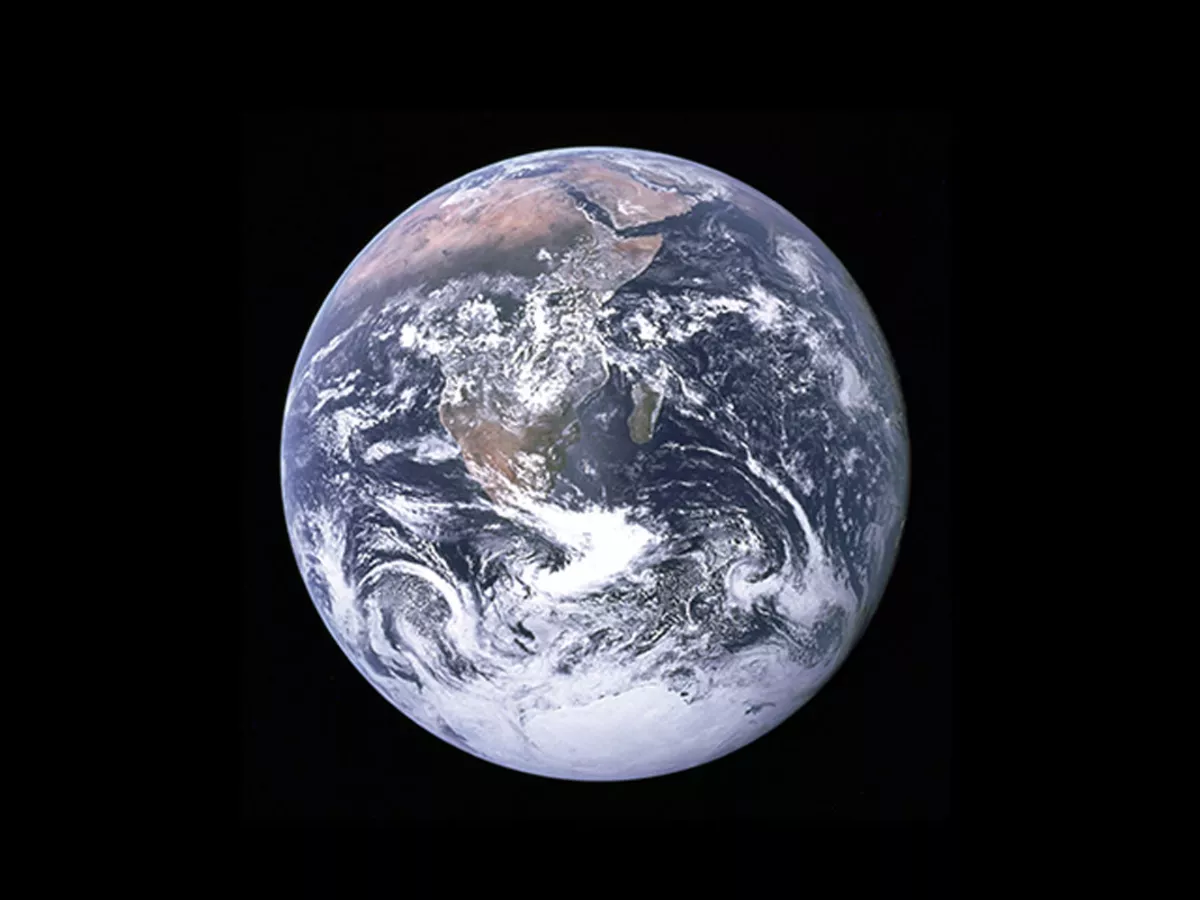
Richard Garan an astronaut reflecting upon after his experience in space wrote” On earth economic growth is often treated as the ultimate goal. From orbit that hierarchy collapses. The correct order becomes clear: planet first, society second, economy last because without a healthy planet neither society nor economy can exist.’.
So why is a sense of community important? It gives us a sense of belonging, a sense of identity, a feeling of connection and a sense of support. We are social animals. We can identify ourselves as part of the collective narrative. The support offered can help in difficult times which boosts our personal and collective resilience and personal sense of well-being. Being part of something which is greater than ourselves can bring a sense of joy and something of the whole is greater than the sum of its parts.
In the I Ching, The well is a symbol for community. Historically wells were at the centre of villages a place where everyone would gather and the source of water – a life source.
Without water communities do not survive. The maintenance of the village well would be a community concern. Healthy communities share resources for the good of the whole as we see n the wonderful initiatives such as: community orchards and Share Sheds where people come together to share resources. Surely healthy communities can work together to create a healthy planet. Our daily news is filled with the shadow aspect of community where division and tribalism are promoted designed to create rifts between different sectors of our society. To promote a sense of ‘them and us’. Research tells us when we work together with a sense of cohesion our mental health improves and we know there is a strong correlation between our mental and physical health.
Richard Garan reminds us that earth viewed from space:’ appears as a single radiant blue sphere suspended in darkness. No lines divide continents. No flags mark territory.’ Being part of community can bring up fundamental feelings about belonging ‘am I welcome here?’. ‘can I be loved’.
One way of working with these inner dilemmas which can impact our relationship with all that we relate to is Sandplay Therapy. In sandplay we can put the different aspects of self into the sandtray (consciously or unconsciously) to help us understand our inner world and our relationship with the outer world. It has been described by H Friedman as an ‘x-ray of the psyche’ as it allows the unconscious internal states, emotions and conflicts to be seen and mirrored back to us in three-dimensional symbolic form. It’s a great way to begin to work on our internal relationship with community.
The Nautilus Rooms in Totnes hosts a number of practitioners who offer sandplay therapy. It is also the leading centre in the south and south west of UK in providing specialised training in sandplay therapy. Check out: https://sandplayuk.com for more information or www.nautilusrooms.uk for information about local therapists.
Or contact: Ruth Baker at : ruth@sandplayuk.com